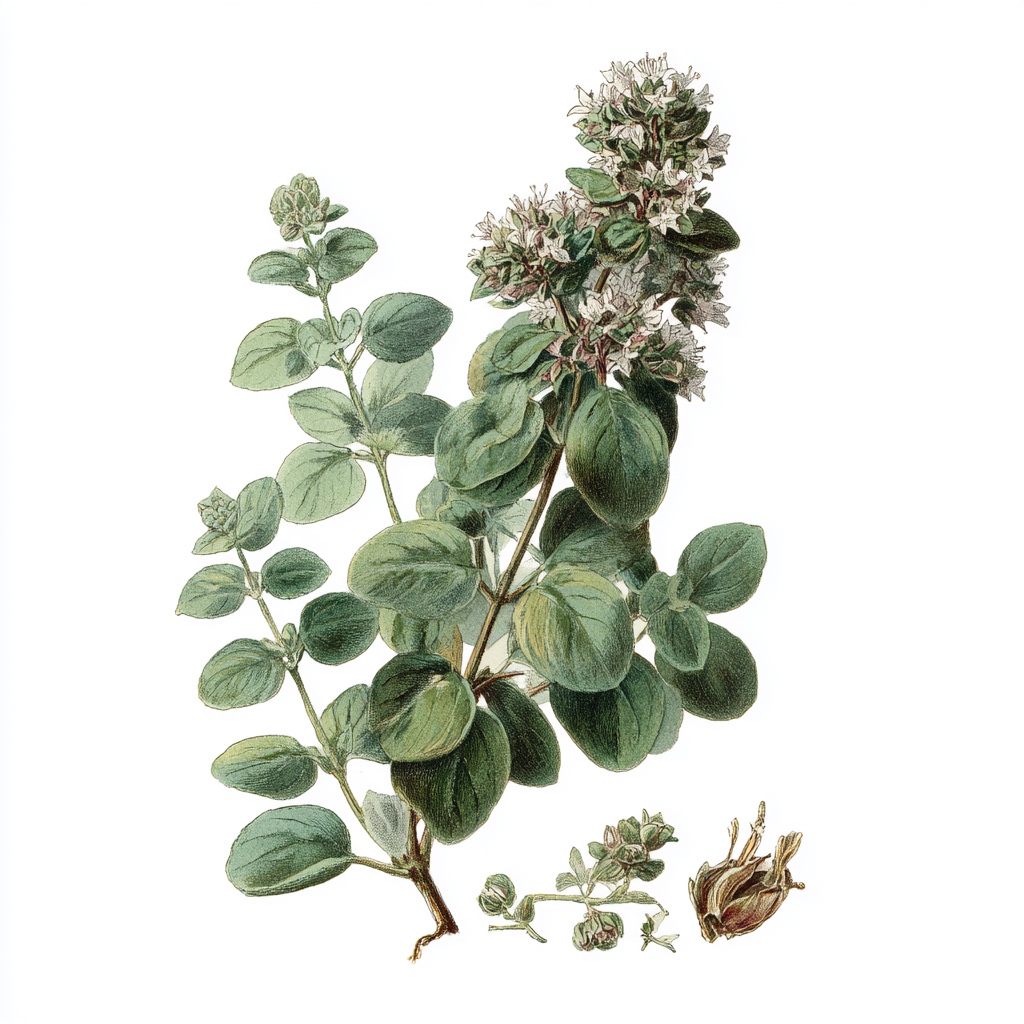
PLATE IV—Oregano
Origanum vulgare
a plant for the table

Family
Lamiaceae
Origin
Mediterranean basin
In the kitchen
leaf
Season
Summer to early autumn
In the practice
(Field observations)
On the windowsill
A bunch hung upside down to dry.
Between two fingers
Crushed onto a warm tomato.
In the oil
A pinch with the garlic, before the heat.
In a jar
Leaves stored whole, broken at use.
As a habit
Reached for without thinking.
Observations.
A leaf that asks for very little and rewards the kitchen for the rest of the year.
Sometimes the most powerful support for an imbalanced gut is already sitting in your kitchen pantry.
For a long time, I only thought about oregano when it was sprinkled over a hot pizza. It wasn't until my own gut healing journey that I realized this humble herb is so much more than a simple kitchen staple.
When I was working through deep digestive imbalances, I learned to stop looking for quick fixes and start focusing on how to support my internal terrain.
Oregano contains carvacrol and thymol. These aren't just scientific terms. They are active components that help create an environment where unfavorable microbes struggle to survive, all while supporting your natural digestion from the root. It is also packed with antioxidants, vitamin K, and magnesium—making it an incredible, accessible ally when you are trying to address inflammation and reclaim your vitality.
How to bring it into your day
- Dried vs. fresh: Both are excellent. Dried oregano is highly concentrated, making it a potent pantry staple for year-round support.
- Beyond the pizza slice: Whisk it into extra virgin olive oil for dressings, stir it generously into warming stews, or steep the fresh leaves in hot water for a grounded, digestion-supporting evening tea.
Rebuilding your health doesn't require complicated, restrictive protocols. Real transformation starts when you listen to your body and leverage the everyday lifestyle medicine right in front of you.